Ⅰ.Basic Parameter
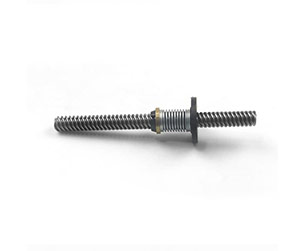
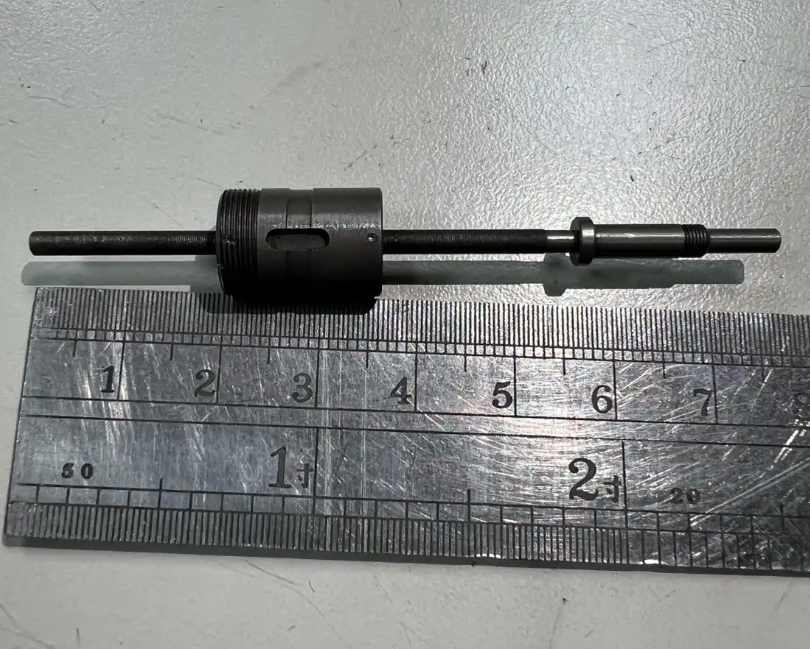
Outer diameter of screw:2.5mm,Ultra-fine diameter, suitable for the internal space of dexterous hands.
Lead:0.6mm,High resolution, meeting the requirement of precise grasping (such as positioning at the 0.01 mm level).
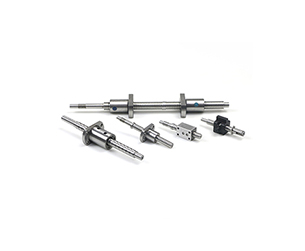
Transmisson:Planetary roller screw,Higher load capacity and more compact than traditional ball screws.
Thread starts:4 starts for nut / 1 start for screw,Achieve small lead through the differential principle (Formula: (4/1 - 1) × 0.6 = 0.6 mm).
Number of rollers:6 pieces,Balance load capacity and volume (1 mm in diameter, 5 mm in length).
Meterial:Screw: Stainless steel SUS440C; Nut: POM engineering plastic,Wear-resistant, low-noise, suitable for high-frequency micro-movement.
Rated load:50N,Thrust requirement for single finger joint (can grasp 500g objects).
Efficiency:>85%,Low-friction thread design.
The miniature planetary roller screw achieves high precision and load capacity through the multi-point contact between the rollers, screw shaft, and nut. The differential thread design (with different thread starts between the screw shaft and the nut) enables a small lead, which is crucial for applications requiring fine linear motion, such as in dexterous hands. Additionally, the distribution of multiple rollers helps balance the load, making the transmission more stable and efficient.
Ⅱ.Core Application Scenario: Driving the "Precise Motion Execution" of Dexterous Hands
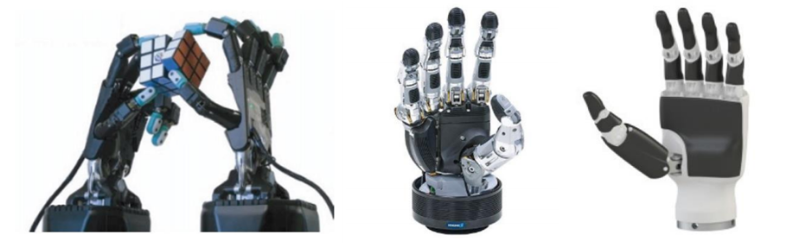
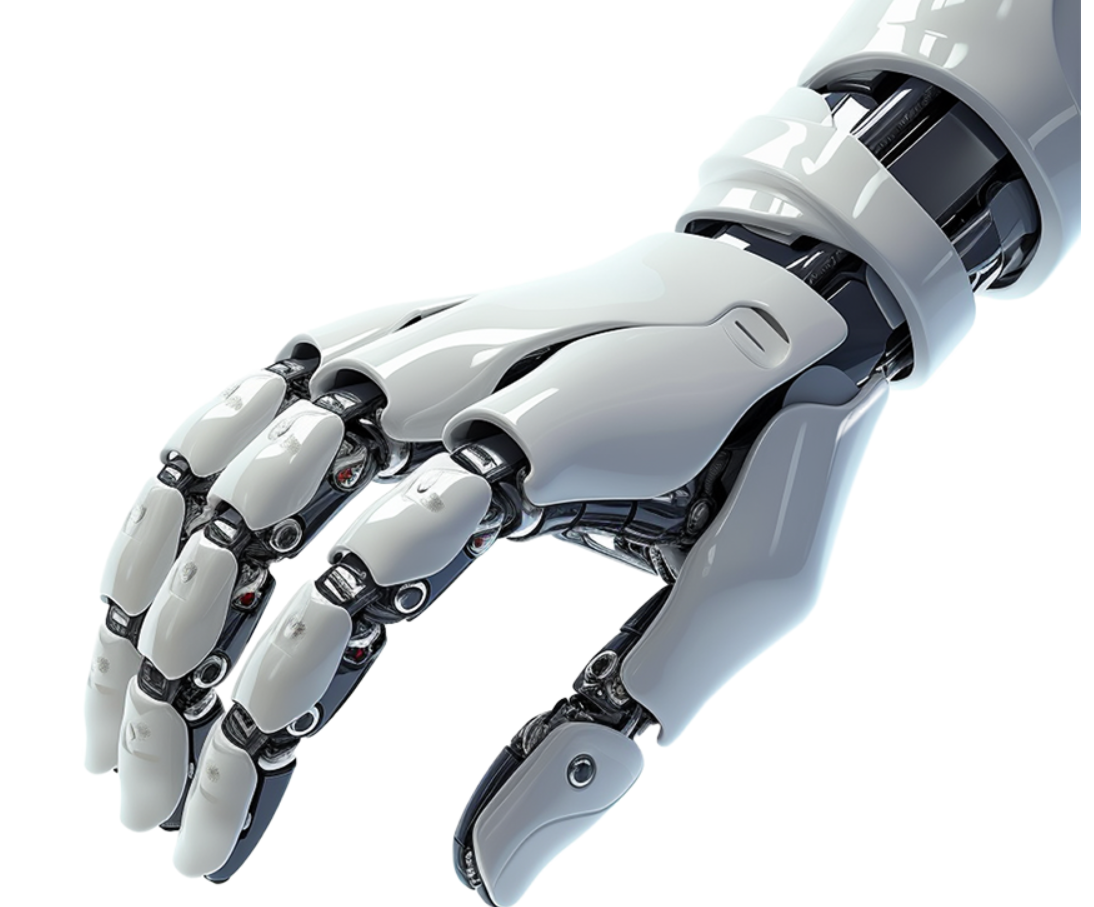
The core requirement of a robotic dexterous hand is to simulate the multi-degree-of-freedom movements of a human hand (such as finger flexion/extension, joint rotation, and fingertip fine-tuning) and achieve precise grasping of objects (e.g., pinching small parts, holding fragile items). Ball screws are mainly used in two scenarios: finger joint driving and end effector fine-positioning compensation.
1.Independent Driving of Multi-Joint Single Fingers
Each finger of a dexterous hand (e.g., thumb, index finger) typically contains 2-3 movable joints (such as the proximal interphalangeal joint and distal interphalangeal joint). As a core component of a "micro linear actuator," the ball screw converts the rotational motion of the motor into the linear displacement of the joints, thereby driving the fingers to bend or extend.
For example, when grasping a microelectronic component with a diameter of 5mm, the ball screw needs to drive the joints to achieve displacement control at the 0.1mm level, ensuring precise matching between fingertip force and position.
2.Fine-Positioning Compensation of End Effectors
The fingertips of some dexterous hands are equipped with pressure sensors or visual sensors. When the sensor detects a deviation in the grasping position, the ball screw can respond quickly and adjust the fingertip position through linear motion with a small stroke (usually 5-10mm), preventing the object from slipping or being damaged.
For example, when assembling precision gears, the ball screw can compensate for a positional error of ±0.05mm to ensure assembly accuracy.
Ⅲ.Customized Design And Typical Application Cases
Customized Design
1.Lead Customization: Small Lead Matching Fine Motions
The lead of conventional industrial screws is mostly 5-10mm, while the lead of screws dedicated to dexterous hands is usually designed to be 0.5-2mm. For example, a screw with a 0.6mm lead can achieve the effect of "the motor rotates one full circle, and the fingertip moves 0.6mm". When combined with a reduction mechanism, the displacement accuracy can be further improved to the 0.01mm level.
2.Material and Lubrication: Adapting to High-Frequency and Low-Noise Requirements
The screw shaft is mostly made of stainless steel (e.g., SUS440C) to enhance wear resistance, while the nut is made of engineering plastics (e.g., POM) or copper alloy to reduce noise caused by metal friction. Meanwhile, solid grease (instead of liquid lubricating oil) is used to avoid oil contamination of grasped objects (such as food and electronic components).
3.Integrated Design: Integration with the Drive Unit
In some solutions, the ball screw is integrated with a micro stepping motor and an encoder into a "linear drive module". This design reduces assembly errors and shortens the response time (the time from command issuance to action execution can be controlled within 10ms), meeting the "fast response" requirement of dexterous hands.
Typical Application Csaes
1.Industrial Assembly Dexterous Hands
In the 3C industry (e.g., mobile phone assembly), dexterous hands equipped with ball screws can grasp flexible circuit boards (FCBs) as thin as 0.1mm, and achieve precise fitting through the fine adjustment of joints driven by the ball screws.
2.Medical Surgical Dexterous Hands
In minimally invasive surgical robots, the fingers driven by ball screws can simulate the fingertip movements of doctors, enabling control of surgical instruments at the 0.005mm level and reducing surgical trauma.
3.Service Robot Dexterous Hands
The dexterous hands of household service robots are driven by ball screws, which can complete daily actions such as "grabbing a water cup and unscrewing a bottle cap" while balancing force and precision.
 English