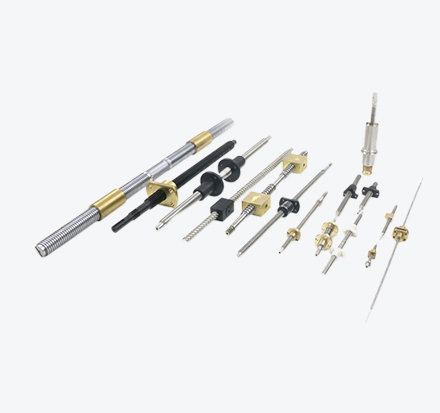
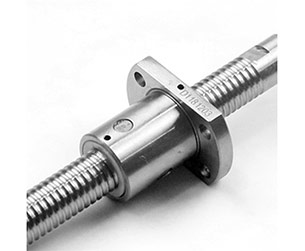
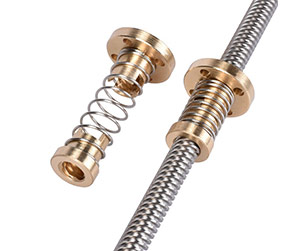
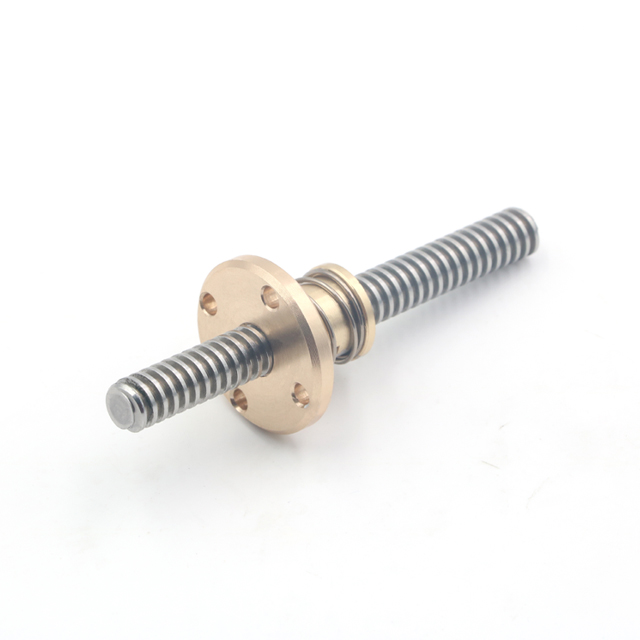
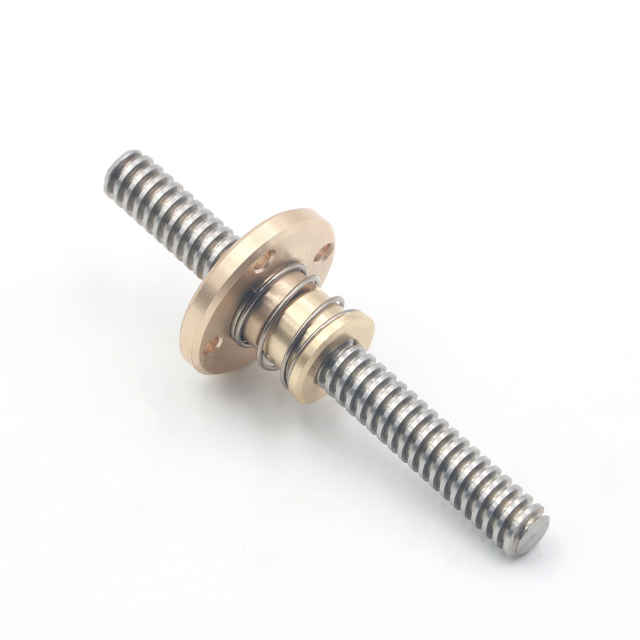
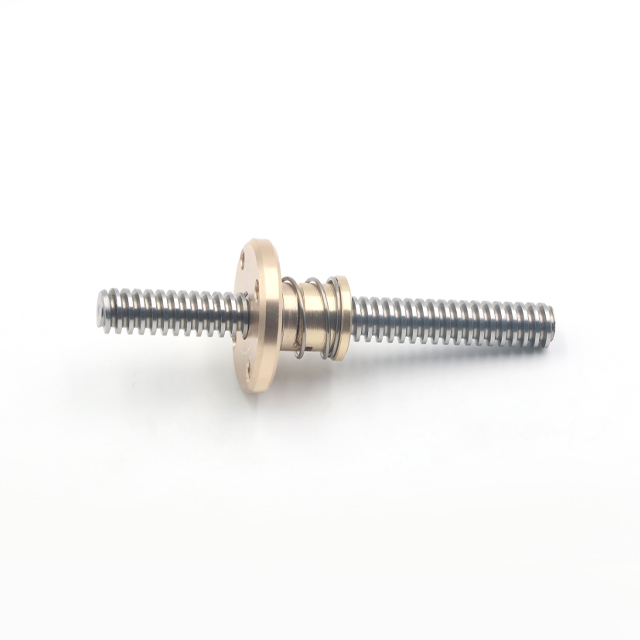
A sliding lead screw (also known as a sliding screw or trapezoidal lead screw) is a mechanical transmission component that realizes the mutual conversion between rotational motion and linear motion through the sliding friction between the screw and the nut. Its core advantages lie in its simple structure, low cost, strong load-bearing capacity, and ability to achieve self-locking. Therefore, it is widely used in scenarios where requirements for precision and speed are not extreme, but there are clear demands for economy and basic transmission functions.
Core Application Fields and Typical Scenarios
The application of sliding lead screws covers multiple fields such as industrial equipment, civil products, and automobile manufacturing. The key lies in matching the transmission requirements of "low rotational speed, medium-low precision, high load, or self-locking necessity". The specific scenarios are as follows:
1. Industrial Automation and General Mechanical Equipment
This is the most important application field of sliding lead screws, which are mostly used to realize the "precision pushing/pulling, lifting/lowering, or positioning" of components in equipment, and are sensitive to motion smoothness and cost:
Machine Tool Auxiliary Mechanisms: Such as the feed of the carriage box in ordinary lathes and milling machines (controlling the horizontal/longitudinal movement of cutting tools or workpieces), and the spindle lifting of drilling machines (manual or semi-automatic adjustment of drilling depth). High speed and precision of ball screws are not required; the low cost and self-locking property of sliding lead screws can meet basic feed needs.
Material Handling and Conveying Equipment: Including small lifting platforms (with a load capacity of less than 500kg), the fork lifting mechanism of stackers, and the tensioning device of belt conveyors. Their strong load-bearing capacity is used to achieve stable lifting of heavy objects, and self-locking after power failure can prevent heavy objects from falling, improving safety.
Clamping and Positioning Devices: For example, the clamping mechanism of tooling fixtures (pushing the clamping jaws to press the workpiece through the rotation of the lead screw) and the fine-tuning bracket of welding torches in welding equipment. The "small lead + self-locking" characteristics of sliding lead screws can achieve stable clamping force and position retention, avoiding workpiece loosening or torch deviation.
Packaging and Printing Equipment: Such as the lifting of the sealing mechanism in packaging machines and the paper positioning push plate in printing machines. The transmission speed is low (usually < 1m/s) and the positioning accuracy requirement is only ±0.1mm, so the economic advantage of sliding lead screws is significant.
2. Automotive and Transportation Industry
Sliding lead screws are mainly used for auxiliary transmission of automotive body components, chassis adjustment, and special-purpose vehicles, and need to adapt to the vibration and load requirements of the vehicle-mounted environment:
Automotive Seat Adjustment: For example, the forward-backward sliding and backrest angle adjustment of manual/electric seats (in some mid-to-low-end vehicle models). Small-lead sliding lead screws are adopted, which realize fine adjustment through rotating handles or motor drive. They have a compact structure and lower cost than ball screws.
Automotive Sunroof/Door and Window Transmission: The opening mechanism of early manual sunroofs and the side window lifting of commercial vehicles (such as trucks). The self-locking property of sliding lead screws ensures that the sunroof/window does not slide by itself when staying at any position.
Special-Purpose Vehicle Auxiliary Devices: Such as the lifting awning of RVs and the cab seat adjustment of engineering vehicles (such as excavators). These need to bear a certain weight (awning or seat + personnel), and the strong load-bearing capacity of sliding lead screws can meet the demand.
3. Medical Devices and Civil Equipment
Scenarios in this category have high requirements for safety and stability, and most involve low-frequency and low-speed motion. The self-locking property and reliability of sliding lead screws are crucial:
Medical Devices: Including the lifting adjustment of hospital beds (manual or electric), the height/angle fine-tuning of operating tables, and rehabilitation equipment (such as wheelchair lifting frames). Self-locking after power failure can prevent the accidental movement of hospital beds/operating tables, ensuring patient safety; at the same time, their simple structure facilitates disinfection and maintenance.
Office and Household Equipment: For example, manually adjustable height-adjustable office desks (realizing tabletop lifting by driving the lead screw through a rotating handle), the drawer pushing/pulling mechanism of file cabinets (with small lead screws for auxiliary positioning), and the presser foot lifting of household sewing machines. No electric drive is needed, and the advantages of low cost and easy operation of sliding lead screws are prominent.
 English