Nominal Diameter: 8mm, referring to the outer diameter of the lead screw, which is the nominal diameter of the thread.
Lead: 1.5mm, defined as the axial distance between two corresponding points on adjacent threads of the same helix, measured on the pitch cylinder’s generatrix.
Effective Stroke: 58.5mm, representing the movable range of the nut.
Total Length of Lead Screw: 114mm, indicating the overall length specification of the lead screw.
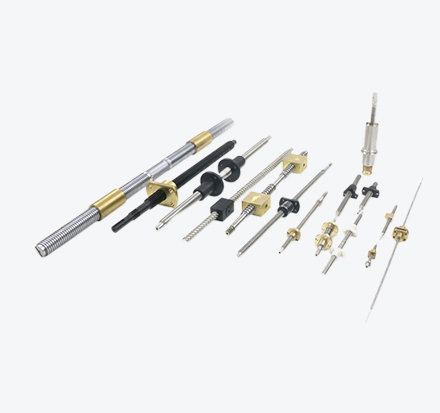
The assembly consists of a steel lead screw (marked "U") and a brass alloy nut (marked "B"). The steel material ensures high strength and wear resistance of the lead screw, while the brass alloy nut has inherent self-lubricating properties to reduce friction.
As a sliding lead screw, its transmission efficiency is typically around 30%-40%. It features self-locking capability but has relatively lower positioning accuracy and axial rigidity compared to ball screws, with higher friction during operation.
Suitable for compact spaces in equipment such as desktop CNC routers and 3D printers, providing stable linear motion transmission. It meets the motion requirements of light to medium load scenarios—for example, enabling precise movement of print heads in 3D printers.
Applicable to small precision instruments that require a certain level of motion accuracy, such as laboratory testing equipment and measuring instruments. It can achieve micro linear displacement, ensuring the measurement or detection accuracy of the instruments.
Used in some small medical devices like medical imaging equipment and small surgical auxiliary devices, which demand precise position control. The sliding lead screw not only ensures stable transmission but also reduces maintenance frequency due to the self-lubricating property of the brass alloy nut, meeting the reliability and low-maintenance requirements of medical devices.
Driven by advancements in materials science and mechanical manufacturing technology, sliding lead screws will develop toward higher precision and higher transmission efficiency to meet the needs of more high-precision equipment. Meanwhile, efforts will be made to enhance wear resistance and corrosion resistance—for instance, through new wear-resistant coatings or improved material formulations—to extend service life.
By integrating sensors and control systems, real-time monitoring of the lead screw’s operating status (e.g., temperature, vibration, wear level) will be realized. The system can automatically adjust based on monitoring data to improve the stability and safety of equipment operation and reduce downtime caused by faults.
Under the impetus of green development concepts, sliding lead screws with low energy consumption and long service life will become a research focus. Enterprises will optimize designs and adopt environmentally friendly materials to reduce energy consumption and environmental impact throughout the product’s life cycle, supporting the sustainable development of the industry.
With the in-depth advancement of smart manufacturing and Industry 4.0, downstream industries will have growing demands for sliding lead screws with high performance, high precision, and customization. At the same time, the process of domestic substitution will accelerate—domestic enterprises will gradually enhance their competitiveness in the international market, and the industry concentration will also increase steadily.


 English