1. Definition and Working Principle
1.1 Definition and Working Principle of Stepper Motors
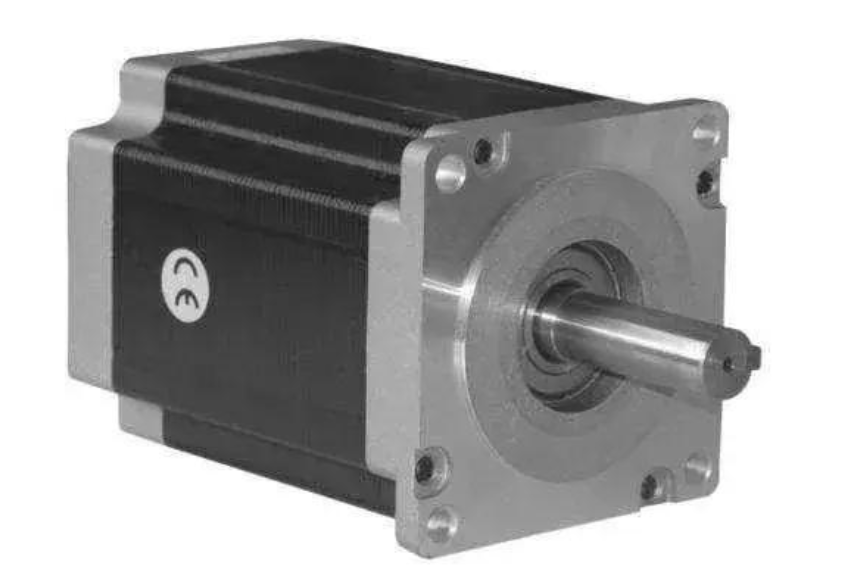
A stepper motor is an open-loop control component that converts electrical pulse signals into angular or linear displacement. Its working principle is based on electromagnetic theory, where the rotation angle and speed of the motor are precisely controlled by regulating the frequency and number of pulse signals. The rotation of a stepper motor proceeds step by step at a fixed angle, which is referred to as the step angle. The control accuracy of a stepper motor depends on the size of the step angle—the smaller the step angle, the higher the control accuracy. For instance, a stepper motor with a step angle of 1.8° rotates by 1.8° each time it receives a pulse signal. This unique characteristic makes stepper motors highly suitable for applications requiring precise positioning, such as the movement of printer carriages and the accurate control of robotic arms.
1.2 Definition and Working Principle of Servo Motors
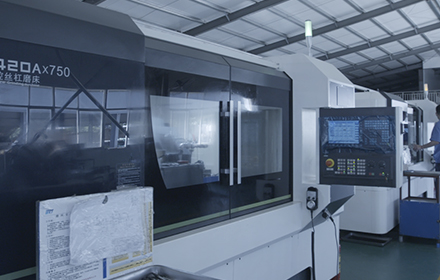
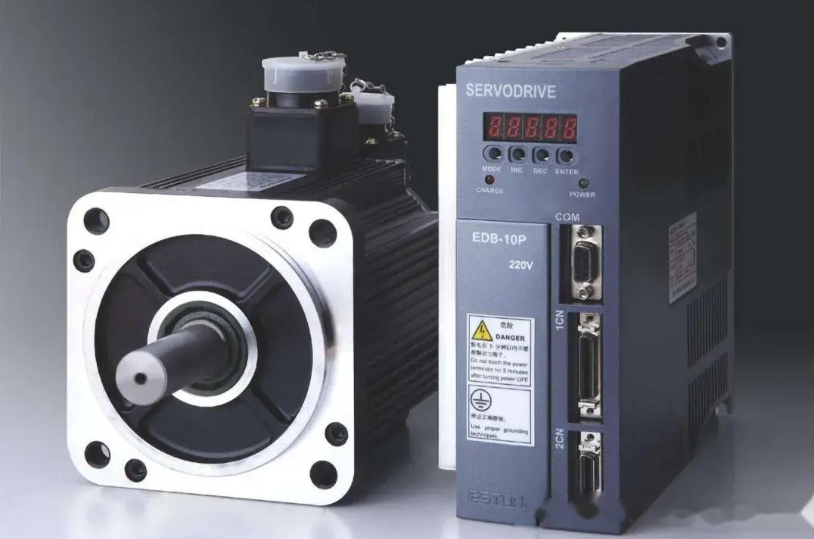
A servo motor is a motor used in closed-loop control systems, which regulates its rotational speed and position through feedback signals. A servo motor typically consists of a motor body, an encoder, a controller, and a power supply. The encoder is used to measure the position and speed of the motor, while the controller adjusts the motor’s operation based on the feedback signals from the encoder. Servo motors feature high control accuracy and are capable of achieving high-speed, high-precision motion. Their working principle relies on a precise feedback mechanism; the feedback signals provided by the encoder enable the system to real-time adjust the motor’s operating status to reach the predetermined position and speed. This closed-loop control method allows servo motors to deliver outstanding performance in applications demanding high precision and dynamic response, such as CNC machine tools and robotic arms.
2. Control Methods
2.1 Control Method of Stepper Motors
The control method of a stepper motor is relatively simple, which falls into the category of open-loop control. In this control mode, the rotation angle and speed of the stepper motor are fully determined by the input pulse signals. The system does not require feedback signals to adjust the motor’s motion; therefore, the control accuracy of a stepper motor is limited by the step angle and the accuracy of the pulse signals.
Stepper motor control typically involves two key parameters: pulse frequency and pulse count. Pulse frequency determines the motor’s rotational speed, while pulse count dictates the total rotation angle of the motor. For example, if a stepper motor has a step angle of 1.8°, inputting 60 pulses per second will cause the motor to rotate 108° (60 pulses × 1.8° per pulse).
This control method enables stepper motors to achieve precise position control at a low cost and with simple control logic, but at the expense of speed control accuracy and dynamic response capability.
2.2 Control Method of Servo Motors
The control method of a servo motor is more sophisticated, which is based on closed-loop control. In a closed-loop control system, the operating status of the servo motor (including position, speed, and acceleration) is fed back to the controller in real time via an encoder. The controller compares these feedback signals with the preset target values, calculates the deviation, and then adjusts the motor’s input signals to minimize the deviation, thereby achieving precise control.
This control mode allows servo motors to deliver high-precision position control and excellent dynamic response. Servo motor control generally consists of three core loops: position loop, speed loop, and current loop. The position loop is responsible for determining the motor’s final position; the speed loop adjusts the motor speed to reach the target position quickly and accurately; the current loop regulates the motor current to generate the required torque.
This multi-loop control structure ensures that servo motors exhibit superior performance in various applications, especially in scenarios requiring rapid start-stop operation and high-precision positioning.
2.3 Comparative Analysis
There are significant differences between the control methods of stepper motors and servo motors. The open-loop control of stepper motors gives them advantages in terms of cost and simplicity, but they have limitations in speed control and dynamic response. In contrast, although the closed-loop control of servo motors increases costs and system complexity, it provides higher control accuracy and dynamic response capability.
In practical applications, the selection of the motor type depends on the specific requirements of the application, including the required control accuracy, speed range, dynamic response, and cost budget. For example, stepper motors may be a cost-effective choice for applications that demand fast and precise positioning but have low requirements for speed control. Meanwhile, servo motors are more suitable for applications requiring high precision and rapid dynamic response.
3. Low-Frequency Characteristics
3.1 Low-Frequency Characteristics of Stepper Motors
Stepper motors exhibit some unique characteristics when operating at low frequencies. First and foremost, stepper motors tend to experience resonance and vibration at low speeds, a phenomenon closely related to load conditions and driver performance. Studies have shown that the vibration frequency is approximately half of the motor’s no-load starting frequency.
Such low-frequency vibration is detrimental to the normal operation of machinery. Therefore, damping technologies are usually required to mitigate this issue during low-speed operation, such as installing dampers on the motor or adopting microstepping technology in the driver. This low-frequency characteristic of stepper motors limits their application in scenarios requiring smooth operation.
3.2 Low-Frequency Characteristics of Servo Motors
In contrast, servo motors demonstrate superior stability and smoothness when running at low frequencies. Thanks to their closed-loop control feature, servo motors do not suffer from vibration even at low speeds. Servo systems typically come with resonance suppression functionality, which can compensate for insufficient mechanical rigidity. Additionally, the system is equipped with a built-in Fast Fourier Transform (FFT) frequency analysis function that can detect mechanical resonance points, facilitating system adjustments. These characteristics make servo motors more suitable for applications requiring smooth motion, such as precision positioning and fine machining.
3.3 Comparative Analysis
The differences in low-frequency characteristics between stepper motors and servo motors are mainly reflected in terms of vibration and stability. Due to their open-loop control nature, stepper motors are prone to vibration at low frequencies and require additional damping measures for improvement. On the other hand, with closed-loop control and advanced feedback mechanisms, servo motors can maintain stable operation at low frequencies without the need for extra damping measures.
This characteristic makes servo motors ideal for applications with high requirements for vibration reduction and stability, while for stepper motors, designers need to take their low-frequency vibration issue into account and implement corresponding solutions.
4. Torque-Frequency Characteristics
4.1 Torque-Frequency Characteristics of Stepper Motors
The torque-frequency characteristic of a stepper motor refers to the relationship between its output torque and rotational speed. The output torque of a stepper motor generally decreases as the rotational speed increases, with a particularly sharp drop occurring at relatively high speeds. This characteristic limits the maximum operating speed of stepper motors, which typically ranges from 300 to 600 RPM.
According to experimental data, stepper motors can maintain high torque output below their rated speed, but the torque output decreases rapidly once the speed exceeds the rated value. This impairs the performance of stepper motors in high-speed applications.
4.2 Torque-Frequency Characteristics of Servo Motors
In contrast, servo motors exhibit a constant torque output characteristic within their rated speed range (usually 2000 RPM or 3000 RPM). When the speed exceeds the rated value, servo motors switch to a constant power output mode.
This characteristic enables servo motors to maintain high torque output over a wide speed range, making them suitable for applications requiring extensive speed regulation and constant torque output. Such performance benefits from the closed-loop control and precise adjustment capability of servo motors, allowing them to excel in applications demanding high speed and high dynamic response.
4.3 Comparative Analysis
There are significant differences in torque-frequency characteristics between stepper motors and servo motors. Stepper motors can deliver high torque at low speeds, but their torque drops sharply as speed increases, which restricts their use in high-speed applications.
On the contrary, servo motors are capable of providing constant torque output across a broad speed range, making them more suitable for applications requiring wide speed adjustment and constant torque. For example, in applications such as machine tool spindle drives and robot joint drives, the constant torque characteristic of servo motors can deliver better performance and higher production efficiency. Meanwhile, stepper motors are more commonly used in scenarios where speed requirements are low but high torque output is needed, such as some simple positioning and handling tasks.
.jpg "791e1f14514adef9bd2dd1bcb686dbe3(1).jpg")
 English