In multiple fields such as industrial automation, mechanical transmission, and CNC equipment, there is a key yet often overlooked mechanical component—the coupling. Though small in size, it plays an irreplaceable role in the operation of equipment.
I. What Is a Coupling?
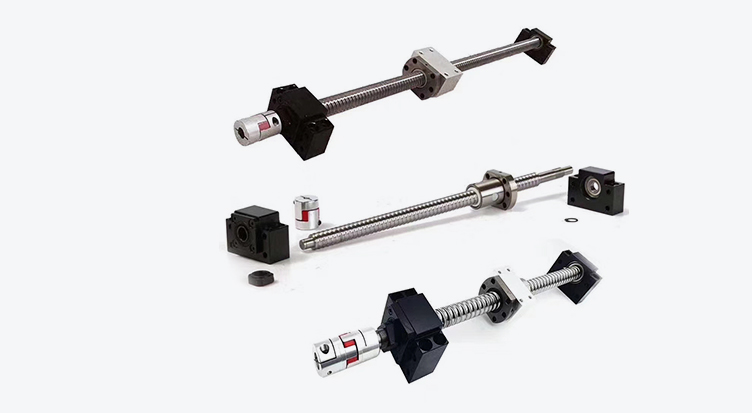
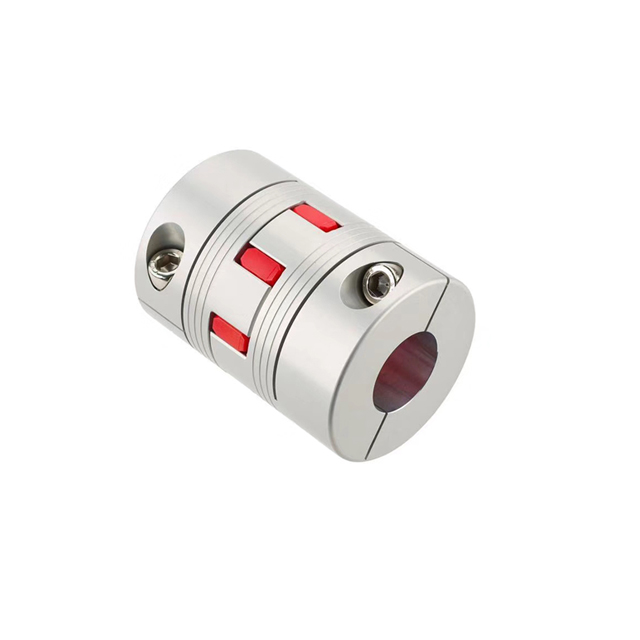
A coupling is a mechanical component used to connect two rotating shafts. Its primary function is to transmit torque, allowing power to be smoothly transferred from one end to the other. Common connected components include motor shafts, reducer shafts, ball screw shafts, lead screw shafts, etc. Couplings link two rotating parts via a mechanical structure, enabling them to operate in coordination.
II. Core Functions of a Coupling
In addition to its basic power transmission function, a coupling also serves several key purposes:
1. Absorb Shaft Misalignment
In practical use, due to machining errors, installation inaccuracies, or temperature changes, two connected shafts often cannot be perfectly coaxial. This may lead to issues like eccentricity, angular deviation, or axial movement. Couplings can absorb these shaft misalignments within a certain range, reducing the equipment’s reliance on high-precision installation and thus lowering commissioning and maintenance costs.
2. Vibration Damping and Noise Reduction
Some couplings feature elastic elements or flexible structures. During equipment operation, they can absorb vibrations and impacts, playing a buffering and noise-reducing role while extending the equipment’s service life.
3. Overload Protection
If abnormalities (such as jamming or overloading) occur during equipment operation, couplings can use their structural breaking or disengagement mechanisms to prioritize damaging the coupling itself, cutting off power transmission. This prevents damage to high-value components like motors and reducers, thereby protecting the equipment.
III. Application Scenarios of Couplings
Couplings are widely used in the following industries and equipment:
Connection between servo motors and screws in automated production lines
Transmission systems in CNC machine tools and packaging machinery
Precision motion units in semiconductor, photovoltaic, and new energy equipment
Conveying equipment, robots, printing equipment, etc.
Whether for high-speed, high-precision, or heavy-load low-speed application scenarios, selecting the right coupling is the foundation for stable equipment operation.
IV. What Are the Types of Couplings?
Based on different structures and uses, common couplings mainly include the following categories:
Rigid couplings: Simple structure, suitable for applications with high shaft alignment accuracy.
Elastic couplings: Contain internal elastic components, capable of absorbing vibration and impact.
Diaphragm couplings: Compensate for shaft misalignment via the bending of metal diaphragms, suitable for high-speed and high-precision scenarios.
Plum blossom couplings, Oldham couplings, Bellows couplings, etc.: Each has unique characteristics, and selection is based on shaft misalignment, speed, torque, and space requirements.
V. How to Choose the Right Coupling?
When selecting a coupling, you need to comprehensively consider the specific operating conditions, including the following factors:
Required transmitted torque and rotational speed
Type and magnitude of shaft misalignment between the motor and load
Requirements for shock resistance, response speed, and service life
Whether the installation space is limited
Whether overload protection is needed
To ensure accurate selection and stable operation, it is recommended to consult a professional coupling supplier for product information and technical support.
VI. Recommended Supplier: Suzhou SCREWTECH.
If you are looking for reliable coupling products, you may refer to the product catalog and selection guide provided by Suzhou SCREWTECH. The company specializes in the R&D and sales of automation transmission components, offering a range of high-precision, durable couplings suitable for various industrial fields.
 English