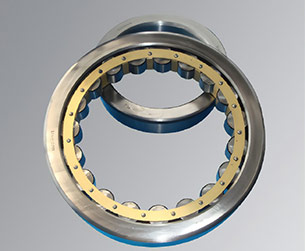
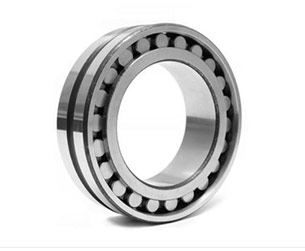
SUJ2 (Japanese Standard) / GCr15 (Chinese Standard): High-carbon chromium bearing steel, the most widely used material for ball screws.
SCM440 (Japanese Standard) / 42CrMo (Chinese Standard): Chromium-molybdenum alloy structural steel, a medium-to-high strength alloy.
Stainless Steel (e.g., SUS440C, SUS304): Primarily used in corrosion-resistant scenarios.

The performance differences of materials directly correspond to different usage requirements. The specific application scenarios are divided as follows:
SUJ2 / GCr15 (Bearing Steel)
Application Scenarios: General machinery, CNC machine tools, automation equipment, precision instruments, and other scenarios that require high precision and wear resistance but have no strong corrosive environment.
Typical Cases: Feed axes of CNC lathes, transmission mechanisms of robotic arms, and high-precision axes of 3D printers.
SCM440 / 42CrMo (Alloy Structural Steel)
Application Scenarios: Heavy-duty equipment under large loads and impact conditions, or scenarios where toughness is more required than extreme wear resistance.
Typical Cases: Spindle transmission of heavy-duty machine tools, motion axes of large presses, and precision transmission components of construction machinery.
Stainless Steel (e.g., SUS440C)
Application Scenarios: Food processing equipment, medical equipment, semiconductor manufacturing equipment, transmission mechanisms in outdoor or humid environments, and scenarios that require rust prevention or pollution prevention.
Typical Cases: Transmission axes of food packaging machines, precision components of surgical robots, and motion mechanisms of cleaning equipment.
In addition to the base material, surface treatment can further optimize performance. Common treatment methods and their functions are as follows:
Chrome Plating / Zinc Plating: Improve the corrosion resistance of SUJ2 and SCM440 materials and extend their service life in humid environments.
Nitriding Treatment: Increase surface hardness and wear resistance while reducing internal material stress, suitable for high-precision and high-speed scenarios.
Black Oxide Treatment: Mainly plays a basic rust prevention role, with low cost, suitable for ordinary dry environments without corrosion.
 English