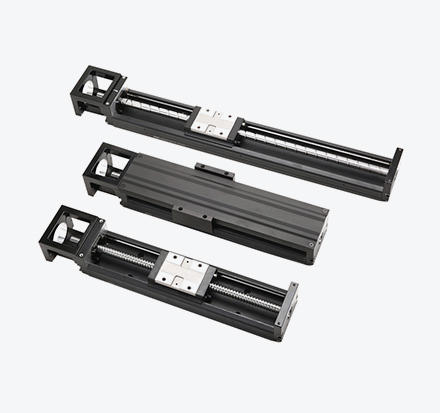
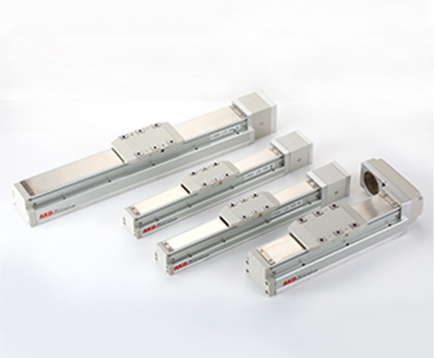
Against the backdrop of the rapid development of automated equipment, there are distinct performance differences between ball screw modules and trapezoidal screw modules. In traditional applications, ball screw modules have dominated high-speed scenarios with a transmission efficiency of over 90%. Thanks to years of advancements in technical materials, structural optimization and lubrication technologies, trapezoidal screw modules now achieve high-speed operation of more than 15 m/min in fields such as logistics sorting and robot joints, with the ball screw rust proof performance further enhancing its industrial applicability.
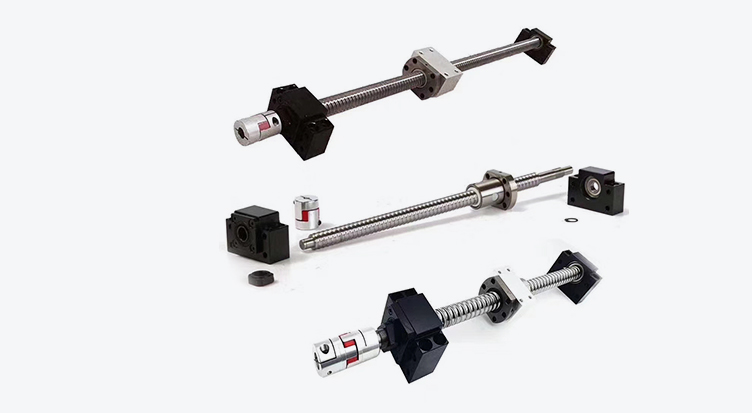
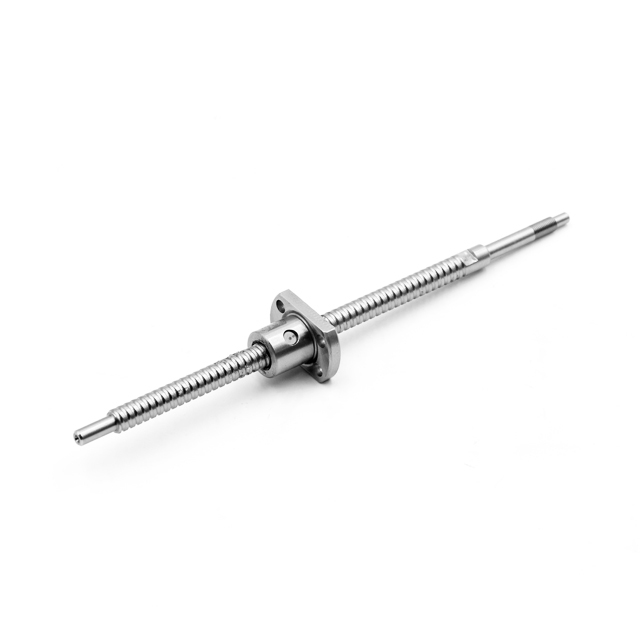
Transmission efficiency determines the speed limit: Ball screw modules adopt balls rolling between the screw shaft and nut, which is rolling friction with a transmission efficiency usually as high as over 90%. This enables them to achieve high-speed motion more easily with the same input power and generate low heat, and the excellent ball screw rust proof performance further ensures stable high-speed operation in industrial environments.
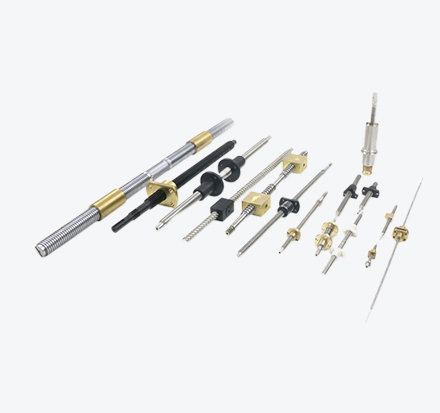
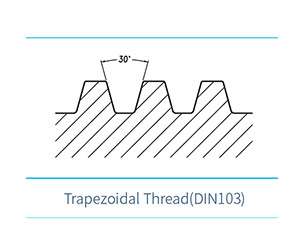
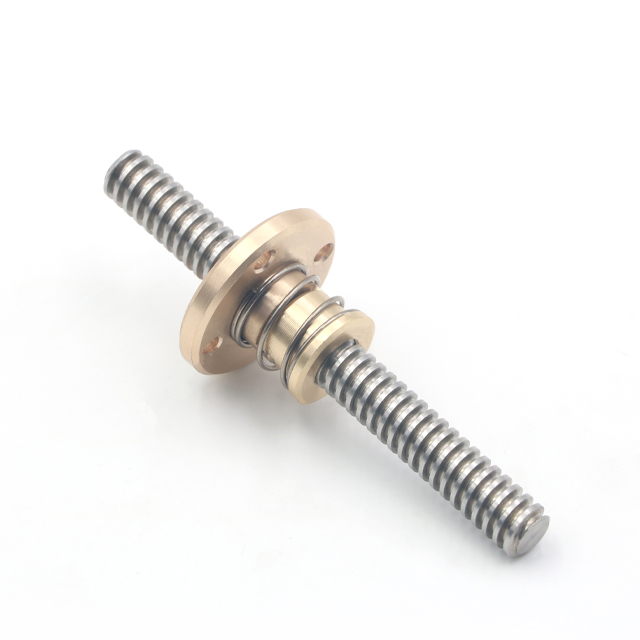
Friction properties affect temperature rise and service life: Trapezoidal screw modules transmit power through sliding friction on the thread surfaces, featuring a high friction coefficient and low efficiency. During high-speed operation, excessive friction generates a large amount of heat, which is prone to causing screw expansion, precision loss and even seizing, severely limiting their high-speed performance. The superior ball screw rust proof performance can further reduce friction-induced wear and extend the service life of transmission components in industrial applications.
Differences in maximum rotational speed: Due to the differences in structure and friction principles, the maximum allowable rotational speed of ball screw modules is much higher than that of trapezoidal screw modules. With the same lead, the rotational speed of ball screw modules can reach several thousand revolutions per minute, while that of trapezoidal screw modules is greatly limited. The reliable ball screw rust proof performance further ensures the stability of high-speed operation at extreme rotational speeds for long periods.
Accuracy and Retentivity: During high-speed reciprocating motion, the preloaded structure of ball screw modules can effectively eliminate backlash and ensure high positioning accuracy and repeat positioning accuracy. Trapezoidal screw modules, however, have inherent backlash; even if adjusted, the backlash is more likely to increase due to wear under high-speed operation, leading to accuracy loss. The excellent ball screw rust proof performance further reduces wear-induced precision degradation, maintaining the long-term stability of its positioning accuracy in high-speed working conditions.
To sum up, ball screw modules are the first choice for high-speed and precision applications, with their micron-level positioning accuracy and low-friction characteristics being irreplaceable; through technological iteration, trapezoidal screw modules demonstrate a cost-effective advantage in cost-sensitive or self-locking medium-to-high speed scenarios. Each has its own strengths and provides a high-quality driving foundation for industrial manufacturing, and the reliable ball screw rust proof performance further bolsters the long-term stable operation of ball screw modules in various high-speed industrial applications.
 English