1.Brief Introduction
As a key transmission component in automated equipment, ball screws may produce abnormal noise, vibration, or axial backlash during operation. These issues directly reduce positioning accuracy and product yield, and can even cause unexpected downtime.
This article provides a standardized troubleshooting and diagnostic process for automation design engineers, equipment maintenance personnel, and custom automation business owners. Through systematic inspection steps, the root cause can be quickly identified. practical solutions are provided to restore high-precision, high-stability operation of the equipment.
2.Step-by-Step Guide: From Diagnosis to Repair
Do not disassemble the screw randomly when faults occur. Follow the logical sequence of observation, inspection, measurement, and analysis as outlined below:
Step 1: Visual and Installation Base Inspection (Observation)
Operations:
Shut down and disconnect power, then rotate the screw manually to check for uniform resistance.
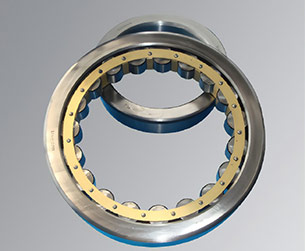
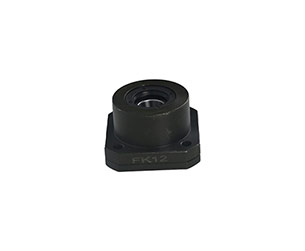
Check whether the mounting bolts of the end support blocks (bearing housings) are loose.
Verify the parallelism and perpendicularity between the ball screw and linear guide.
Inspect the dust cover (bellows cover / scraper) for damage and check for iron filings or dust buildup inside.
Key Points:
Misalignment is the main cause of vibration: if the screw axis is not parallel to the guide, the nut will be subjected to lateral force during movement, resulting in severe vibration and abnormal wear.
Loose support blocks are a common source of abnormal noise, especially at high speeds, where loose bearing housings produce periodic knocking sounds.
Step 2: Lubrication and Cleanliness Check (Inspection)
Operations:
Check if the grease has dried, degraded, or leaked.
In harsh environments (e.g., cutting fluid splash, heavy dust), inspect for contaminants inside the nut.
Reapply special lithium-based grease and observe whether abnormal noise is reduced.
Key Points:
Insufficient lubrication always causes noise: rolling balls in a dry condition generate sharp metallic friction sounds.
Contamination jamming: tiny metal chips entering the ball recirculation path create a “jumpy” feeling and lead to low-frequency vibration.
Step 3: Preload and Backlash Measurement (Measurement)
Operations:
Use a dial indicator (or micrometer head) against the nut side, push the nut back and forth, and measure axial movement (backlash).
For double-nut structures, check if preload shims are worn or lock nuts are loose.
For single-nut structures, determine whether excessive clearance between balls and raceways has developed due to long-term wear.
Key Points:
Backlash standard: precision equipment typically requires backlash < 0.01 mm. If exceeding 0.05 mm, preload adjustment or nut replacement is usually necessary.
Preload failure: loss of preload causes “lost motion” during reverse movement, directly leading to inaccurate positioning and impact noise.
Step 4: Load and Drive Matching Analysis (Analysis)
Operations:
Calculate whether the actual load exceeds the rated dynamic load of the ball screw.
Check if motor acceleration/deceleration parameters are set too aggressively (whether S-curve is properly configured).
Confirm concentricity of the coupling and wear condition of the elastic element.
Key Points:
Resonance: if vibration occurs only at specific speeds, the screw’s critical speed may be close to the operating speed, or mechanical resonance is present.
Drive shock: overly fast acceleration/deceleration causes elastic deformation and rebound in a weakly rigid screw system, which appears as vibration.
3.Common Problems & Notes
Misunderstanding 1: Replacing only the screw, not the nut?
Fact: Ball screws and nuts are manufactured and matched as a precision set. If the screw is worn, the nut is almost certainly worn as well. Replacing only one part will leave residual clearance unaddressed and may even accelerate wear on the new component.
Jesse Automation Recommendation: Replace the ball screw assembly as a set to ensure optimum accuracy and service life.
Misunderstanding 2: Thicker grease is always better?
Fact: For high-speed applications (DN value > 50,000), low-viscosity, high-flow grease should be used to avoid excessive churning resistance and overheating. High-viscosity grease is only suitable for low-speed, heavy-load conditions. Using the wrong grease is a hidden cause of abnormal noise.
Misunderstanding 3: Ignoring machining accuracy of the mounting base?
Fact: Even a high-precision C3-grade ball screw will perform like a C10-grade unit if the flatness and parallelism of the mounting base are only 0.1 mm. Installation accuracy defines the upper limit of actual performance.
Preventive Maintenance Recommendations
Establish a regular inspection routine: Check lubrication every 3 months and inspect backlash every 6 months.
Dust protection is critical: In dusty or cutting-fluid environments, always use modules equipped with multi-layer dust seals or telescopic bellows covers.
 English