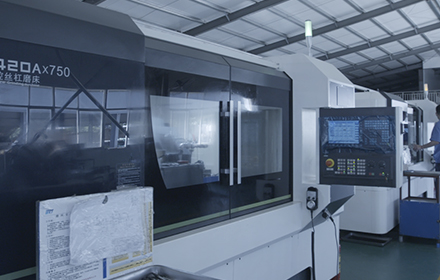
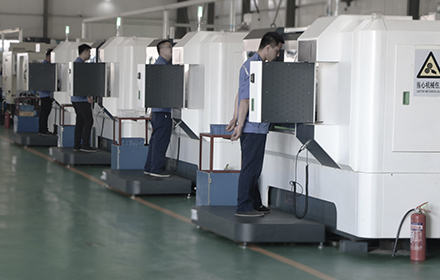
In the field of precision manufacturing, the machining accuracy of CNC machine tools directly determines the final quality of products.
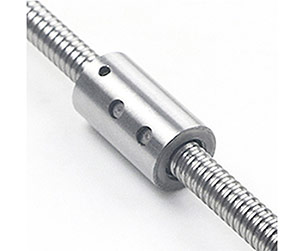
In the machine tool transmission system, the ball screw is known as the "heart", whose performance is directly related to the machine’s positioning accuracy, repeat positioning accuracy, and dynamic response characteristics. When it comes to high-precision CNC machine tools, there is an unwritten industry rule: ground ball screws must be used instead of rolled ball screws.
This is not a prejudice against the rolling process, but is determined by the essential differences between the two in terms of microstructure, manufacturing process, and physical properties.
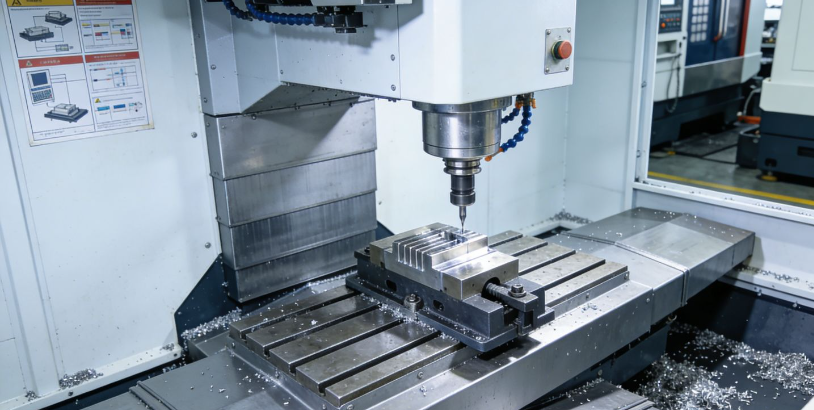
The Source of Craftsmanship: The Fundamental Showdown Between Cutting and Forming
To understand why ground ball screws are superior, we must first thoroughly examine their respective manufacturing processes.
Rolled ball screws are produced using a cold extrusion process. In simple terms, immense pressure is applied to force a metal bar through a die, causing plastic deformation that forms the screw threads. This process is highly efficient, ideal for mass production, and cost-effective. However, during the severe deformation of the metal, the internal crystal lattice structure becomes distorted, and the surface is prone to microcracks and residual stress.
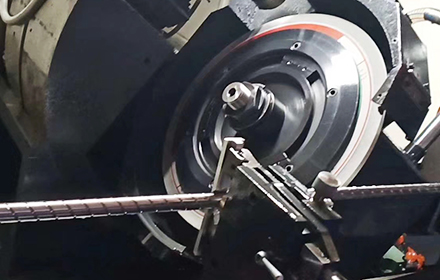
In contrast, ground ball screws are manufactured using a cutting and grinding process. After the screw shaft has been heat-treated and hardened, high-precision grinding wheels are used to perform micron-level cutting. This is akin to meticulously carving a hard stone with a chisel, rather than forcibly shaping it like the rolling process. The grinding process eliminates surface defects in the material and corrects deformation caused by heat treatment, resulting in extremely high geometric accuracy.
Precision Grade: The Chasm Between C3 and C7
In industrial standards, the precision of ball screws is commonly measured by the "C" value (e.g., C0, C3, C5, C7, C10). A smaller number indicates higher precision, meaning a smaller lead error within any 300mm stroke of the screw.
Constrained by die wear and the uncertainty of metal springback, rolled ball screws typically achieve a precision grade of C7 (error of 0.05mm/300mm) or C10. While this precision may suffice for general material handling robots or injection molding machines, it is simply a "disaster" for high-precision CNC machine tools requiring micron-level machining.
Ground ball screws, by comparison, easily reach C5 (error of 0.018mm/300mm), C3 (error of 0.008mm/300mm), and even C0 grades. When providing selection solutions for customers, SCREWTECH unanimously recommends C3 or C5 grade ground ball screws for equipment such as five-axis linkage machining centers and precision grinders. This is because, on such machines, even errors of a few microns can lead to the scrappage of expensive aerospace components.
Stiffness and Preload: The Key to Eliminating "Backlash"
High-precision machine tools, when machining complex surfaces or performing high-speed direction changes, are most vulnerable to backlash—the lost motion that occurs during reverse rotation. To eliminate backlash, preloading of the ball screw is mandatory.
The thread raceways of ground ball screws are precision-ground to an extremely regular shape with an exceptionally high surface finish (Ra values typically range from 0.1–0.4μm). This enables perfect four-point contact between the balls and the raceways, allowing for much higher preload forces and significantly enhancing system stiffness. High stiffness ensures the screw does not undergo elastic deformation during heavy cutting, guaranteeing the stability of machining dimensions.
In contrast, rolled ball screws have a relatively rough surface and micro-irregularities in their thread profiles, making it impossible to apply high preloads. Forcing high preload would cause accelerated ball wear and a drastic reduction in service life. As a result, rolled ball screws often appear "fatigued" under high-speed reciprocating motion and heavy cutting conditions, failing to meet the dynamic response requirements of high-precision machine tools.
Service Life and Stability: The Answer Given by Time
Differences in heat treatment processes also determine the disparity in service life.
Ground ball screws typically undergo full hardening or induction hardening before grinding, resulting in a deep, uniform hardened layer with hardness reaching HRC 58–62. The grinding process itself also strengthens the surface, enabling the screw to maintain stable accuracy over long-term use.
Rolled ball screws, however, are formed first and then heat-treated (or only undergo surface hardening). During heat treatment, the release of internal metal stresses makes them highly prone to bending deformation, and their hardened layer is relatively thin. Under long-term high-frequency friction, the accuracy retention of rolled ball screws is far inferior to that of ground ball screws. For a CNC machine tool worth millions of RMB, it is clearly not cost-effective to compromise the overall machine accuracy after just six months just to save on the cost of the ball screw.
 English